


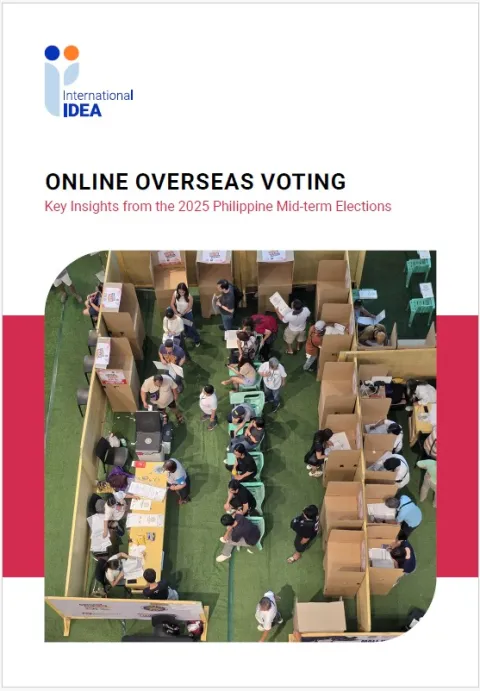
Online Overseas Voting
Key Insights from the 2025 Philippine Mid-term Elections

The 2025 mid-term elections in the Philippines marked a turning point in the country’s efforts to extend democratic participation to its overseas citizens. For the first time, the Commission on Elections deployed an Online Voting and Counting System (OVCS) in 77 jurisdictions, complementing existing in-person and postal arrangements. This reform sought to address long-standing barriers to electoral participation by a diaspora that exceeds 12 million people, such as geographical dispersion, logistical constraints and administrative inefficiencies.
While the initiative was technically implemented as planned, it did not deliver a substantial increase in participation. Only 18.36 per cent of the 1.24 million registered overseas voters cast a ballot, a figure broadly consistent with previous mid-term elections. Implementation also highlighted critical policy issues: the absence of explicit legislative authority for online voting, uneven enrolment and information campaigns, and gaps in public trust arising from limited transparency and weak voter verification mechanisms. Allegations of cyber threats and ongoing petitions before the Supreme Court further underscored the fragility of the institutional basis for the reform.
The Philippines experience demonstrates that the adoption of online voting, while feasible, cannot on its own overcome structural barriers to enfranchisement. Future development of the OVCS will require legal clarity, adequate and predictable resourcing, sustained engagement with diaspora communities and stronger public communication strategies to counter disinformation and build confidence in digital systems. If approached as a process of incremental reform and institutional learning, rather than as a single event, online voting has the potential to contribute to more inclusive, cost-effective and resilient electoral participation. Beyond the Philippines, the experience provides relevant lessons for other jurisdictions considering remote or digital special voting arrangements for mobile populations.
On 12 May 2025, voters in the Philippines participated in nationwide mid-term elections to elect the 317 members of the House of Representatives, 12 senators and more than 18,000 local government officials across the provincial, city and municipal levels. Held in a politically charged atmosphere,1 these elections coincided with the midpoint of the administration’s term and were widely regarded as a de facto referendum on its performance.2 As the polls closed, analysts viewed the 2025 election results as reflecting two parallel trends: a rejection of the incumbent administration, signalling a resurgence of a Duterte-aligned dominance; and a reassertion of liberal political forces (Palatino 2025; Coronel 2025).
Voter participation in these elections was particularly significant. Of 69.67 million registered voters, 57.35 million cast their ballots, representing a turnout of 82.2 per cent—the highest ever recorded for a mid-term election in the Philippines (Sampang 2025).3
This level of voter engagement followed the introduction of a series of reforms and innovations by the Commission on Elections (COMELEC), the constitutionally mandated, independent body responsible for overseeing electoral processes in the Philippines. These measures were part of COMELEC’s strategy to increase voter participation (Locus 2024), improve transparency and accessibility and strengthen public confidence in both the conduct of the 2025 elections and their outcomes (see Box 1.1).
Box 1.1. Key reforms and innovations adopted for the 2025 Philippine mid-term elections
- New automated counting machines with upgraded features. Automated counting machines (ACMs) have been in use since 2010 but the 2025 mid-term elections saw the deployment of 110,000 enhanced units. These featured improvements for transparency, such as privacy touchscreens for vote verification, built-in receipt trays and smart card readers; accessibility, control switches and headphones for persons with disabilities and older voters; and efficiency, longer battery life and auto-align feeders.
- Introduction of early voting hours and priority polling places. For the first time, between 05:00 and 07:00, polling precincts were reserved exclusively for older voters, people with disabilities and pregnant women. Priority polling places were conveniently situated on ground floors, where authorized electoral board members assisted voters with casting their ballots and feeding them into the ACMs.
- Expansion of the ‘Register Anywhere’ programme. For the 2025 mid-term elections, voters were able to register at designated locations nationwide, regardless of their place of residence. Registration sites were set up in main shopping malls, churches and public plazas to enhance convenience and accessibility.
- Streamlined voter verification process. Printed lists of registered voters were posted outside polling precincts to enable easier and faster identification and verification prior to being allowed to vote.
- Establishment of additional polling precincts. In response to an increase in the number of registered domestic voters of approximately 2.7 million (a 4.1 per cent rise between 2022 and 2025), additional polling precincts were established, including in non-traditional venues such as shopping malls.
- Modernized regulatory framework. COMELEC adopted several resolutions to protect electoral integrity, including measures to regulate the use of artificial intelligence, prohibit vote buying and discourage discriminatory practices in election campaigns.
- Deployment of the Online Voting and Counting System. In a landmark initiative to widen electoral participation among the Philippines’ large and geographically dispersed diaspora, COMELEC introduced the Online Voting and Counting System, a digital out-of-country voting platform.
Among the various reforms and innovations adopted for the 2025 mid-term elections, this report focuses on COMELEC’s introduction of an Online Voting and Counting System (OVCS) to enfranchise overseas voters. The paper explores the rationale behind the system, its design and architecture, the implementation process, key challenges and initial outcomes. The thematic focus is guided by the growing global interest in special voting arrangements (SVAs), which are becoming increasingly important globally for electoral management bodies (EMBs) seeking ways to effectively enfranchise mobile, remote and displaced populations.4 The Philippines online overseas voting initiative provides a timely and insightful example of how such arrangements can be operationalized in a transnational electoral context.
The analysis of this report intends to contribute to the ongoing global discourse on SVA design and implementation, as outlined in International IDEA’s Special Voting Arrangements Handbook, which presents comparative insights, policy guidance and good practices in support of inclusive and credible alternative voting mechanisms. The paper is also closely aligned with International IDEA’s newly launched thematic area on Migration and Elections, which examines the interplay between electoral participation, mobility and political inclusion. In this broader context, the Philippine experience with online overseas voting adds to the growing body of knowledge on how states are adapting their electoral frameworks to respond to the realities of global migration and diaspora engagement. In sum, this report intends to:
- offer targeted recommendations to COMELEC on the continued improvement and institutional consolidation of the OVCS;
- provide insights from the Philippine experience for policymakers, electoral officials, development partners and other stakeholders in jurisdictions exploring digital channels for enfranchising their citizens abroad; and
- contribute to the broader discourse on electoral innovation by reflecting on the implications of absentee voting for democratic inclusion and electoral integrity in an era of increasingly mobile electorates.
The Philippines has a long-standing history of large-scale emigration. Over 12 million Filipinos currently live and work abroad (Ratha et al. 2023), which constitutes the fourth largest diaspora in the world (Ratha et al. 2023). Filipino citizens overseas are concentrated primarily in the United States (47 per cent), Asia (24 per cent), the Middle East (22 per cent), Europe (6 per cent) and Africa (0.23 per cent) (Commission on Filipinos Overseas n.d.). Overseas Filipino workers (OFWs) comprise around 10 per cent of the national population and represent a vital pillar of the Philippine economy (Roces 2021). In 2024, OFWs remitted a record USD 38.34 billion, accounting for 8.3 per cent of the Philippine gross domestic product (Fintech News Philippines 2025).
These remittances reflect OFWs’ enduring ties with their home country, whether through financial support to their families or investments aligned with long-term aspirations, such as retiring to the Philippines (Albert et al. 2023). As a community shaped by decades of labour migration, a significant proportion of the Filipino diaspora continues to have a vested interest in the governance and policy direction of its country of origin. In recognizing overseas Filipinos as ‘modern-day heroes’, the Philippine Government has progressively introduced policies aimed at safeguarding their welfare and enabling them to represent their interests in national life, including through participation in elections. These efforts have encompassed labour protections, consular assistance and reintegration programmes. A central element of this engagement has been the extension of political rights through overseas voting, allowing Filipinos abroad who maintain an intention to return to take part in the country’s democratic processes.
The right of Filipinos overseas to participate in elections was first affirmed in article V, section 1 of the 1987 Philippine Constitution, which provides that suffrage may be exercised by all citizens of the Philippines not otherwise disqualified by law, including those residing overseas, under conditions prescribed by law. However, it took more than 15 years to establish a comprehensive legal framework for overseas voting. Following sustained advocacy by migrant rights organizations and political proponents of overseas enfranchisement, the Overseas Absentee Voting Act (Republic Act No. 9189) was enacted in 2003. This landmark legislation formally extended the right to vote in national elections, specifically for the president, vice president, senators and party-list representatives, to qualified Filipinos residing abroad. A decade later, Republic Act No. 10590 amended the original law, introducing reforms to strengthen voter registration, reduce disenfranchisement and provide greater flexibility on voting methods, including the use of postal voting in select jurisdictions.
Since its initial implementation during the 2004 presidential elections, the Philippine overseas voting programme has been administered in every subsequent national electoral cycle, covering presidential, mid-term and senatorial elections. The overseas voting period typically spans 30 days and is scheduled to conclude on the same day as election day in the Philippines. During this period, registered overseas voters may cast their ballots either in person or by post, depending on the designated voting method in their host country.
In jurisdictions where in-person voting is implemented, voters are required to travel to Philippine embassies, consulates or other designated polling places. In postal voting jurisdictions, the relevant diplomatic missions dispatch ballots and instructions to registered voters. Voters then complete the ballots and return them by post within the prescribed deadline. This method is intended to accommodate those residing far from diplomatic missions, although its implementation has been uneven.
All the election materials for overseas voting, including ballots, voter lists, envelopes and official guidance, are centrally prepared by COMELEC then dispatched to diplomatic missions through coordinated logistical operations involving the Department of Foreign Affairs and other relevant agencies. COMELEC remains responsible for the overall administration, security and counting of overseas ballots, which are returned to Manila and canvassed by the Special Board of Canvassers for Overseas Absentee Voting.
Voter turnout among overseas Filipinos has historically been low, reflecting a persistent gap between the formal provision of voting rights and their effective exercise. Despite the institutionalization and consistent implementation of overseas voting in every national electoral cycle since 2004, its full potential has been largely unrealized.
- The first implementation of out-of-country voting (OCV), during the 2004 presidential elections, saw approximately 233,000 overseas Filipinos cast their votes out of more than 359,000 registered voters, representing a turnout of around 64.8 per cent. While this figure appeared promising, it proved to be an exception rather than a trend.
- In the subsequent 2007 mid-term elections, turnout sharply declined to just 16 per cent, reflecting both limited engagement and the operational constraints of the non-presidential election cycle.5
- The 2010 presidential elections recorded a modest improvement, as 153,000 voters participated of the 589,000 registered (around 26 per cent), which was still far below expectations given the size of the diaspora.
- This downward trajectory continued in later elections. The 2013 mid-term elections saw only a 15.35 per cent turnout, while the 2016 presidential elections, despite renewed efforts at outreach and implementation of postal and in-person modalities, resulted in 430,000 votes cast out of 1.38 million registered voters, a turnout of 31 per cent.
- In the 2019 mid-terms, the figure dropped again to 18.3 per cent (334,000 of the 1.8 million registered), underscoring the continued pattern of disengagement during non-presidential cycles.
- The 2022 presidential elections, held in a post-pandemic context and amid growing calls for reform, saw only a 39.89 per cent turnout. Only around 600,000 ballots were cast from among 1.69 million registered voters, despite intensive voter registration campaigns and the expansion of postal and in-person options across multiple jurisdictions.
The 2025 mid-term elections, which introduced overseas online voting for the first time, were anticipated as a potential inflection point for diaspora voter turnout. However, the expected increase in participation did not materialize.
At 1.24 million, the number of overseas Filipino voters registered to vote in the 2025 mid-term elections was modest relative to the estimated size of the diaspora.6 Online voting was implemented in 77 of the 93 foreign jurisdictions that participated in the 2025 elections (Abad 2025b). In the remaining 16 jurisdictions, OCV continued through traditional methods, either in person or by post. Table 3.1 shows that voter turnout was slightly higher in countries where traditional voting methods were used, compared to those that implemented online voting exclusively.
| OCV method | Foreign jurisdictions | Registered voters | Votes cast | Voter turnout |
|---|---|---|---|---|
| Online | 77 | 1.22 million | 221,284 | 18.12% |
| Traditional | 16 | 20,768 | 6,727 | 32.43% |
| Total | 93 | 1.24 million | 228,011 | 18.36% |
The combined voter turnout for all 1.24 million registered overseas voters in 2025 is recorded at 18.36 per cent. The data underscores persistent barriers to electoral inclusion faced by the Filipino diaspora. Despite the gradually increasing trend for both mid-term and presidential elections (Figures 3.1 and 3.2), overseas voter turnout in the 2025 mid-term elections was actually slightly lower than the turnout of 18.47 per cent recorded in 2019.


Although overseas voter registration has steadily increased, from fewer than 400,000 in 2004 to nearly 1.7 million in 2022, participation has not kept pace. This persistently low turnout highlights a deeper issue: while the overseas voting framework is legally established, it has yet to foster meaningful and sustained political engagement by the majority of overseas Filipinos.
The effective political inclusion of overseas Filipinos has long been hindered by a range of interrelated obstacles. While the legal framework for their participation is firmly in place, the overseas voting system has, in practice, proved inadequate for delivering accessible, inclusive and trusted mechanisms for overseas electoral engagement. There is a persistent gap between the formal provision of voting rights and their exercise by millions of eligible overseas Filipino voters.
The elections preceding the 2025 mid-terms encountered persistent barriers spanning multiple dimensions:
- Eligibility and documentation hurdles. Under the 2003 Dual Citizenship Act, before they can register to vote, overseas Filipinos who have acquired foreign passports must first reacquire Philippine citizenship; others must execute an ‘Affidavit of Intent to Return’.7 These requirements involve fees and embassy visits that some cannot afford or schedule.
- Limited outreach and voter education efforts in host countries. Information dissemination and civic engagement initiatives are often insufficient, particularly among temporary, irregular or undocumented Filipino migrants who often lack access to formal networks or official communication channels.
- Procedural and geographic barriers. The requirement for in-person registration and, in many cases, in-person voting at embassies or consulates, which are typically located in capital cities or major urban centres, has long posed significant obstacles. These challenges are particularly burdensome given the high levels of mobility and wide geographical dispersion of overseas Filipinos. Registering or voting in person has traditionally been difficult for many due to the travel distances involved, limited and costly transport options and work-related time constraints.
- Language and information mismatch. Official voter education relies heavily on English and Tagalog. Communities in some host countries are more comfortable with Ilocano, Cebuano or Bicolano, while younger migrants consume information mainly through social media in the host-country language.
- Operational limitations at overseas voting centres. Reports note the lack of sufficient staff and the reshuffling of appointments as possible constraints on the training of post personnel to keep up with increasingly complex electoral processes (Center for Migrant Advocacy 2011). These capacity gaps have led to logistical delays, administrative errors and voter dissatisfaction.
- Cultural barriers. In some Middle East countries, prevailing social norms or legal restrictions often prevent women from leaving their homes unaccompanied. In the absence of a male guardian or relative to accompany them, female voters have faced barriers to registering or voting in person at embassies and consulates.
- Financial sustainability concerns. COMELEC’s budget for overseas voting has faced substantial cuts in recent years. Only PHP 111.9 million budget (approximately USD 2 million) was allocated in 2022, which is half the amount granted in 2007. These constraints have put increased financial pressure on both the Electoral Commission and overseas voters (Salazar 2023). Overseas voting has been criticized as ‘not value for money’, due to the consistently low turnout rates (Philippine Daily Inquirer 2024). In the 2022 presidential elections, for example, the estimated direct cost per overseas voter was approximately PHP 400 (USD 6.80).8 In 2022, even though direct overseas voting expenditure amounting to PHP 411 million (USD 7.3 million) exceeded the allocated budget, turnout remained low. Only 40 per cent or 688,961 of the 1.69 million registered overseas voters cast a ballot (Salazar 2023).
- Logistical and bureaucratic inefficiencies. Before 2022, voters who opted for postal voting sometimes had to pay the cost of return postage, imposing an additional burden (Salazar 2023). COMELEC has since allocated a budget for postage fees. However, delays in the delivery of election materials were reported in several countries during the 2022 elections. In Hong Kong (Philippine Daily Inquirer 2024), a shortage of vote counting machines led to overcrowding and confusion.
- Perceived irrelevance and weak political party outreach. Philippine political parties rarely maintain a consistent presence abroad and policy platforms seldom address diaspora concerns beyond remittances. Some overseas Filipinos feel that their vote will not influence outcomes dominated by home-based interests.
- Operational issues surrounding postal voting. In the 2016 and 2019 elections, there were widespread reports of ballots being delayed or misplaced, or not being returned, especially in countries with unreliable postal systems. Such incidents undermine confidence in the integrity of the process, leaving many overseas voters uncertain whether their ballots were ever counted. Mismatched voter records contribute to operational issues. Overseas Filipino workers without permanent addresses list an employer’s or a diplomatic post’s address. Meanwhile, some overseas Filipinos with an address fail to update their records.
- Voting procedures inadequate to the working conditions of seafarers. Although sea-based overseas Filipinos contribute approximately 20 per cent of annual remittances and are routinely targeted by party-list campaigns, their extended deployments, which often last six months or more, can make it difficult for them to vote within the 30-day period allocated for in-person or postal voting (Gorecho 2025).
Collectively, these barriers have long raised the need to modernize and strengthen OCV in Philippine elections in order to enhance accessibility, improve operational efficiency and foster greater public trust in the overseas voting process. In the 2022 presidential elections, as COMELEC continued to rely primarily on postal and in-person voting methods, migrant advocacy groups intensified their calls for more accessible and secure digital alternatives. These groups identified long-standing barriers, such as geographic isolation, unreliable postal services and restrictive consular procedures, as persistent deterrents to meaningful overseas voter participation. They argued that without reform, particularly the adoption of online voting or other remote technologies, the Philippines risked the continued de facto disenfranchisement of a substantial proportion of its overseas electorate. This call was echoed by government officials who recognized that expanded Internet connectivity could now support electoral participation by hard-to-reach segments of the overseas electorate (Senate of the Philippines 2023). In this context, the need to explore and institutionalize digital solutions emerged as an increasingly clear pathway to more inclusive democratic participation abroad.
This sense of urgency was further reinforced by fiscal constraints. Budgetary pressures meant that COMELEC was compelled to identify more cost-effective approaches to overseas voting. Online voting, which had long been under consideration, was seen as a potential means of saving taxpayers’ money and addressing persistent accessibility barriers (Philippine Daily Inquirer 2024). The Covid-19 pandemic further exposed the vulnerabilities of traditional voting methods and underscored the need for alternative voting arrangements to ensure the resilience and continuity of electoral processes in times of crisis (International IDEA 2020).
In response to mounting pressure and calls for reform, COMELEC adopted online overseas voting in the 2025 mid-term elections, in a significant milestone in advancing democratic participation in the Philippines. The move addressed long-standing barriers and introduced a more inclusive, efficient and sustainable model for the Filipino diaspora to participate in future electoral processes.
The OVCS was formally launched for the 2025 mid-term elections through COMELEC Resolution No. 11061, marking the culmination of its long-standing efforts to modernize and digitalize the country’s electoral processes. The Philippines was one of the first countries in Asia to explore the potential of online voting, beginning with a pilot involving 30,000 overseas voters in Singapore during the 2007 elections (Spinelli 2018), followed by another simulation in 2017 (Guevarra 2021). COMELEC took further steps towards preparedness by conducting a test run of three different online voting service providers in 2021, in an incremental approach that was widely seen as a cautious response to the lack of a specific legislative mandate for online voting (De Leon 2025). Momentum for digital enfranchisement accelerated following the appointment of veteran election lawyer George Erwin Garcia as COMELEC Chairperson in 2022. Under his leadership, the Commission made a decisive shift, and Garcia publicly announced implementation of online voting for overseas Filipinos less than a year into his term (De Leon 2023), signalling a strong institutional commitment to electoral innovation.
The OVCS was deployed in 77 foreign jurisdictions (Patinio 2025) to complement the OCV methods that had previously allowed overseas voters to cast their ballots remotely by postal vote or in-person in polling locations established at diplomatic missions. This first-of-its-kind development in Philippine electoral practice was aligned with the government’s broader digitalization agenda, which aimed to strengthen political engagement among overseas Filipinos, who are often described as ‘modern-day heroes’ in recognition of their economic and social contribution, but who have historically exhibited low levels of electoral participation. A description of the main features of the OVCS and their sequencing is provided below (see also Figure 6.1).

To participate in elections, Filipinos residing overseas had to first register as overseas voters, either through the COMELEC Office for Overseas Voting prior to their departure from the Philippines or with embassies or consulates in the country of residence. In early 2025, COMELEC launched an information campaign to raise awareness about the OVCS and deployed mobile registration teams (Patinio 2025) to facilitate access.
An additional step introduced by the OVCS for overseas voters was a requirement to pre-enrol accounts in the online voting portal. The pre-enrolment period ran from 20 March to 7 May 2025 across the 77 foreign jurisdictions participating in online voting but had to be extended twice due to low uptake. Of the 1.22 million registered overseas voters, only 234,475 completed the pre-enrolment process (Abad 2025b). To vote online, registered voters had to complete a verification process using an active email address or mobile phone number. Pre-enrolment in the Philippines was geo-blocked for security reasons, but overseas voters could pre-enrol from anywhere abroad. Registered voters then received their credentials to log in to the voting portal by email. During this period, the voting portal also featured test voting where online voters could run through the online voting process in preparation for the elections (Tables 6.1and 6.2).
| No. | Steps in the OVCS enrolment phase |
|---|---|
| 1 | Voters fill out the enrolment form on the official online voting portal |
| 2 | Voters retrieve a one-time password (OTP) sent by email or SMS |
| 3 | Voters are required to enter the OTP into the system to confirm their identity |
| 4 | Voters capture a clear photo of the passport page that shows their details |
| 5 | Voters position their face within the on-screen guide so the system can capture a live photo |
| 6 | Voters review and confirm the information scanned by the system |
| 7 | Once confirmed, voters are enrolled and able to log on to the voting portal |
The 30-day overseas voting period ran from 13 April to 12 May 2025 (until 19:00, PHT). Enrolled voters could cast their ballots online directly or seek assistance at voting kiosks in participating embassies and consulates. Votes were immediately encrypted by the voting device to ensure security and prevent tampering. At the end of the voting process, each voter received a ballot ID and QR code, along with a plain-text hash of the ballot, which served as a ballot locator. This locator did not reveal a voter’s selections but allowed confirmation that the vote had been registered in the system for auditing purposes.9 Encryption was used to safeguard vote privacy, ensure integrity and guarantee that all voters received the same official candidate list. Once the voting period had concluded, all overseas ballots were counted by the OVCS and securely transmitted to COMELEC’s canvassing centres in the Philippines, where these were consolidated with domestic votes.10
| No. | Steps in the OVCS online voting phase |
|---|---|
| 1 | Voters log in using the email address or mobile number they had provided |
| 2 | Voters required to retrieve a new OTP sent by email or SMS and to enter it |
| 3 | Voters select the ‘Click to Vote’ button to open their ballot |
| 4 | Voters required to read the instructions carefully and then select ‘Start Voting’ |
| 5 | Voters choose their preferred candidates from the list provided |
| 6 | Voters required to review their ballot and then press the ‘Cast Your Ballot’ button to submit it |
| 7 | Voters check the confirmation message to ensure their vote has been successfully cast |
The introduction of online voting for overseas Filipinos for the 2025 mid-term elections marked a significant step in modernizing the Philippines’ electoral systems, with the aim of expanding access, increasing participation and addressing long-standing logistical and operational challenges. The launch of the OVCS demonstrated COMELEC’s strong institutional commitment to inclusive and adaptive electoral reform. The online voting system was a response to persistent barriers that have historically limited the political participation of overseas Filipinos.
Due to its unprecedented nature, the reform understandably attracted public, political and legal scrutiny. It also sparked insightful dialogue around electoral innovation, legal clarity and trust in digital systems. These discussions underscored the need for robust safeguards and transparency, while also revealing a willingness among institutions and stakeholders to engage constructively with reform. In this light, implementation of the OVCS should be seen not merely as a technical achievement, but as a critical step forward in making Philippine elections more accessible, responsive and future-ready. A number of key challenges emerged during implementation of the OVCS.
7.1. Legal and institutional challenges
There is a fraught history of political reform in the Philippines (Yusingco et al. 2023). A deep-rooted mistrust of strong state institutions has restricted efforts to rebalance political power, hampering key reforms on matters such as political party regulation, campaign finance regulation, anti-dynasty measures and party list representation (Abinales and Amoroso 2005). This broader legal and institutional context has also constrained electoral innovation at the legislative level (International IDEA 2019). According to the Legal Network for Truthful Elections (LENTE), the existing electoral framework is inadequate to respond to increasing voter mobility and evolving threats to electoral integrity. In this light, the initiatives undertaken by COMELEC can be seen as necessary institutional responses to persistent gaps in the country’s electoral law (Philippine Center for Investigative Journalism 2024). In the case of online voting, the appointment of veteran election lawyer George Garcia as COMELEC Chairperson marked a significant departure from the Commission’s earlier position that a new law would be required to authorize such a reform (De Leon 2023).11
7.2. Legal ambiguity in online voting implementation
Garcia had requested congressional support for online voting in 2022, but later maintained that no new legislation was needed, citing existing legal mandates as sufficient for implementation of the OVCS (Philippine Daily Inquirer 2024).12 This interpretation was challenged in 2025, when the Partido Demokratiko Pilipino–Lakas ng Bayan (PDP–Laban) filed a petition before the Supreme Court to suspend implementation, arguing that online voting constituted a fundamental shift in the voting system and therefore required explicit legislative approval (Murcia 2025). COMELEC proceeded with the rollout in the absence of a Supreme Court decision, while expressing openness to legal clarification by the court (Mendoza 2025). Senate Minority Leader Pimentel also raised concerns over the legal basis of the system, leading to the filing of Senate Resolution No. 1344 on formal investigation of the issue (GMA Integrated News 2025). LENTE observed that while existing jurisprudence might ultimately require legislative amendment for full legal certainty, COMELEC’s actions would not invalidate the votes cast unless the Supreme Court explicitly ruled otherwise. This position is consistent with earlier precedents, such as rulings on the postponement of Barangay elections.
7.3. Procedural hurdles in online voter enrolment
The initial phase of implementation of the OVCS faced several setbacks, such as delays in the release of enrolment links, low public awareness about the OVCS and various technical issues (Abad 2025a). In response, COMELEC turned to social media platforms to explain the causes of the delays, attributing them to the need for comprehensive system testing to safeguard against potential cybersecurity threats, and disseminated informational materials providing further guidance on the voting process.
7.4. Barriers to access to and trust in online voting
While many who completed enrolment were able to cast their votes with relative ease, others, particularly older people or those less proficient/familiar with digital platforms, reported difficulties navigating the OVCS. In some instances, overseas Filipinos were required to visit embassies or consulates to seek technical assistance, thereby undermining the intended convenience and accessibility of the online voting system (Gulla 2025). Additional concerns were raised regarding transparency in the verification process. Unlike in-person voting, which provides a printed receipt, the online system issued a QR code as confirmation that a vote had been cast. However, scanning the QR code revealed only encrypted data, leaving many voters confused and unable to verify the names of the candidates they had selected (Francisquete 2025). While overseas voters may be more familiar with printed receipts as a means of confirming their vote in traditional voting settings, such receipts are typically not issued by online voting systems in order to protect ballot secrecy and uphold the sanctity of the vote. According to the National Citizens’ Movement for Free Elections (NAMFREL), an elections watchdog, much of this confusion stemmed from unclear terminology. Phrases such as ‘verify your vote’ led voters to expect a visible confirmation, while use of the word ‘script’ with reference to the QR code unintentionally suggested manipulation or programming of results. Although COMELEC issued clarifications, the limited outward transparency of the OVCS process affected voter confidence (Foundation for Media Alternatives 2025). Low institutional trust, combined with the absence of robust transparency measures, created communication gaps that left the system vulnerable to misinformation and disinformation (Pimenta 2024; Bicu n.d.).
7.5. Cybersecurity concerns challenged system credibility
The OVCS deployed in the 2025 elections was managed by an SMS Global Technologies–Sequent Tech joint venture that won the tender for PHP 112 million (approximately USD 2 million), well below COMELEC’s PHP 465 million (USD 8.2 million) ceiling (Panti 2025). Built on an open-source, cloud-based architecture, the OVCS platform promised cost savings, greater transparency and real-time monitoring. Integrity safeguards included a full source-code review and international certification conducted with the Department of Science and Technology (Depasupil 2025b), end-to-end vote encryption, screenshot locks and 24/7 monitoring by trained personnel (Manabat 2025). Garcia reported the blocking of more than 75,000 attempted cyberattacks during the overseas voting period, underscoring the system’s defensive capabilities (Sigales 2025). As part of the post-election random manual audit, an onsite manual verification of online votes cast in Dubai was also conducted, with the participation of civil society observers. Overall, both the random manual audit conducted by COMELEC and the parallel count undertaken by the accredited election watchdog, the Parish Pastoral Council for Responsible Voting (PPCRV), reported near-perfect accuracy rates of 99.997 per cent and 99.909 per cent, respectively, for the 2025 elections (Press One 2025). Even so, a report published by the Foundation for Media Alternatives (2025) highlights lingering worries by overseas voters about data breaches, fear of manipulation without detection and the unfamiliarity—and low-cost bid—of Sequent Tech’s solution.
7.6. Balancing security, perception and trust in OVCS implementation
Despite the presence of robust technical safeguards, civil society organizations and election observer groups noted areas for improvement in stakeholder engagement and public communication around the rollout of the OVCS. COMELEC’s awareness campaign, launched in June 2024 (Patinio 2024), was seen by groups such as LENTE and the Center for Migrant Advocacy as somewhat delayed and limited in reach. Only two public consultations with overseas voters were held, both during the voting period itself, which limited opportunities for early input or clarification. Earlier outreach efforts focused primarily on institutional partners, particularly consular staff, who were already managing a wide range of election-related responsibilities (Center for Migrant Advocacy 2011).
This emphasis on administrative preparedness, while necessary, may have come at the expense of broader end-user engagement. As a result, some overseas voters were reluctant to use the new system, contributing to modest turnout levels and concerns around trust in the OVCS. Perceptions of transparency were also affected by the absence of certain familiar safeguards, such as poll watchers, visible random manual audits and user-friendly verification mechanisms. Although good practices were in place, including the post-election manual audit conducted in Dubai, greater visibility and clearer communication of these efforts might have helped strengthen confidence in the system. These issues highlight a core dilemma in digital electoral reform: technology can broaden access, but poor communication of security features can fuel perception and fears of coercion, fraud or disenfranchisement (Spinelli 2018; Wolf, Nackerdien and Tuccinardi 2011; Wilkie 2019). In the implementation of the OVCS, the absence of clear and accessible public messaging left voters unaware of the integrity measures designed to protect their ballots.
The introduction of overseas online voting in the 2025 Philippine mid-term elections marked a significant step forward in digital enfranchisement, offering a new avenue for more inclusive and accessible participation by overseas Filipinos. However, the initial promise of this reform was tempered by limited engagement. While COMELEC celebrated a record-high domestic voter turnout, only 18.36 per cent of registered overseas voters participated through the new online system.
Implementation challenges were both technical and political. Operational delays, cybersecurity concerns and legal ambiguities shaped public perceptions of the OVCS. Allegations of China-backed election interference (Punongbayan 2024) and reported hacking of official government websites (Bordey 2024) further highlighted the urgency of ensuring digital security and resilience. Nonetheless, some aspects of COMELEC’s experience highlight potential long-term benefits. Investment in digital infrastructure and logistics offers promising returns through greater scalability and efficiency. However, the sustainability of online voting will ultimately depend on its ability to build stakeholder trust, reinforce institutional credibility and enhance democratic participation over time.
Several critical insights emerge from COMELEC’s first implementation of the OVCS. These offer valuable lessons not only for the Philippines, but also for other jurisdictions exploring similar innovations to strengthen electoral participation among migrant populations. These insights can be grouped into the following takeaways.
8.1. Electoral integrity requires both technical safeguards and public trust
While COMELEC implemented a range of technical measures to secure the OVCS, including encryption, cybersecurity protocols and real-time monitoring, a greater challenge lay in ensuring electoral integrity as perceived by the public. Electoral integrity is not determined solely by the robustness of digital infrastructure, but also by how electoral frameworks, institutions and processes are understood, perceived and trusted by voters. Confidence in online overseas voting depends as much on transparency, procedural clarity and institutional legitimacy as it does on digital security.
Despite COMELEC’s active presence on social media and efforts to respond to concerns in real time, essential aspects of the process, such as account enrolment, ballot verification and vote confirmation, remained unclear for many overseas voters. Election observers noted that, in its efforts to meet tight implementation timelines, COMELEC appeared to prioritize system delivery over public engagement. This left limited room for trust-building efforts, such as sustained voter education, stakeholder reassurance and narrative framing, which are key to countering misinformation and fostering public confidence. Looking ahead to the 2028 presidential elections, where the stakes will be even higher, it will be essential for future OVCS implementation to integrate proactive and continuous communication strategies as core elements of electoral planning and improvement.
8.2. Voter engagement depends on inclusive design and community participation
If electoral innovations are to be effective, they need to be developed with the close involvement of those they are intended to serve. OVCS implementation underscored the importance of engaging with diaspora communities not just as voters, but as active participants in the reform process for the OVCS. While COMELEC focused on logistical efficiency, there was scope to more effectively mobilize the civic potential of overseas Filipino networks and engage beyond just casting a vote: informing others, participating in consultations, organizing voter education or contributing to reforms. Drawing on diaspora organizations, jointly developing outreach strategies and recognizing communities as contributors to electoral solutions could have helped strengthen uptake and trust. This experience is particularly relevant in contexts with active migrant populations.
8.3. Sustainability hinges on legal clarity and institutional preparedness
Legal ambiguity about online voting can undermine institutional confidence and expose reforms to political challenges. While COMELEC proceeded based on its interpretation of existing laws, the lack of an explicit legislative mandate triggered petitions before the Supreme Court and Senate inquiries. Looking ahead, a clearer legal foundation, whether through revised legislation or judicial clarification, will be crucial to institutionalizing and scaling-up online voting. Legal certainty reinforces public confidence in the legitimacy of new voting technologies.
8.4. Evaluation and learning mechanisms are essential to institutional growth
The 2025 experience underscored the importance of embedding structured feedback and learning processes into electoral innovation efforts. While some post-election audits and outreach activities did take place, a comprehensive system for capturing users’ experiences, recording technical issues and engaging with civil society in a structured manner was not fully established during the 2025 electoral process. Although several pilot exercises were conducted to test the online voting system and collect feedback, the insights gained would have benefited from clearer and more consistent documentation to support their integration into broader institutional learning and reform processes. In future, the integration of strong monitoring, evaluation and learning (MEL) strategies from the outset would support timely problem solving, strengthen COMELEC’s accountability and foster continuous improvement in electoral practice.
8.5. Online voting shows long-term promise despite early limitations
The 2025 implementation of the OVCS by COMELEC demonstrated that online voting is technically feasible and administratively manageable, even in a resource-constrained and highly politically complex context such as the Philippines. However, it also exposed several persistent challenges such as gaps in infrastructure, unclear legal frameworks and limited stakeholder engagement, as well as concerns about transparency and trust. As Internet access and digital literacy gradually improve, online voting is a promising tool for expanding electoral participation, particularly for mobile and underserved populations. The experience of the Philippines shows that while early efforts may be imperfect, they can provide a strong foundation and valuable lessons for future reform.
COMELEC’s introduction of online voting for overseas citizens marked one of several pivotal steps in the Philippines’ democratic trajectory. The initiative reflected a clear ambition to innovate and expand electoral participation, while also revealing the complex realities of electoral reform. Although the system demonstrated that remote digital voting is technically feasible, its significance lies less in immediate outcomes than in two key dimensions: the critical questions it raised on legal authority, voter trust, transparency and institutional readiness, and the groundwork it laid through experience, learning and institutional momentum that can support more inclusive overseas voting processes in the future.
At the heart of the OVCS experience in the 2025 Philippine mid-term elections was a familiar tension: the drive to innovate and expand voter access contrasted with the limitations of electoral frameworks still evolving to meet the enfranchisement needs of mobile and globally dispersed electorates. Crucially, this experience highlighted that while technology can play a critical facilitating role, without a clearly defined legal basis, sufficient institutional capacity and system design, sustained voter engagement and efforts to build an informed electorate, it cannot effectively address the structural and procedural barriers that continue to impede meaningful participation.
Rather than offering a definitive verdict on the viability of online voting—whether from policymakers, electoral authorities or observers—the 2025 experience underscores the need for a more deliberate, inclusive and citizen-informed reform process. Such a process must view voters not as passive recipients of innovation, but as active participants in shaping, embracing and sustaining major electoral reforms such as the OVCS.
The sustainability of such reform will depend not only on continued enhancements to digital infrastructure, but also on political will, legal clarity, sustained engagement with overseas communities, deeper collaboration with technical experts and a proactive and accountable electoral administration. Together, these elements are essential for building trust in the electoral process among the Filipino diaspora and for safeguarding against disinformation, voter manipulation and the further political disengagement of overseas Filipinos.
If viewed as part of a longer-term learning process rather than a one-off initiative, COMELEC’s experience, alongside that of other countries implementing similar online voting systems, may yet prove to be a foundational step towards a more accessible, resilient and mobility-responsive democratic practice for Filipinos, wherever they reside and wish to vote from. It may also offer valuable lessons for other jurisdictions facing similar challenges in enfranchising mobile populations and safeguarding inclusive democratic processes in an increasingly transnational world.
For EMBs in other countries grappling with similar questions, the Philippine experience provides a timely and relevant reference point. It specifically illustrates that while online voting and OCV may offer pathways to greater electoral inclusion, their ultimate success rests on the careful alignment of legislation, capacity, trust, information and technology. Above all, this experience confirms that sustainable electoral reform is not an event but a process that is anchored in context, informed by experience and driven by the shared goal of meaningful democratic participation by all citizens, regardless of location or the circumstances that led them to move.
Abad, M., ‘First days of Internet voting enrollment: Late link, tech issues’, Rappler, 25 March 2025a, <https://www.rappler.com/philippines/elections/first-days-internet-voting-enrollment-issues-overseas-filipinos/>, accessed 25 May 2025
—, ‘COMELEC records dismal Internet voting turnout at 18.12%’, Rappler, 16 May 2025b, <https://www.rappler.com/philippines/elections/overseas-voter-turnout-comelec-report-may-2025/>, accessed 25 May 2025
Abinales, P. N. and Amoroso, D. J., State and Society in the Philippines (United States: Rowman & Littlefield, 2005)
Albert, J. R. G., Habitan, M. T., Tabuga, A. D., Vizmanos, J. F. V., Muñoz, M. S. and Hernandez, A. C., ‘Long-Term Effects of Labor Migration in the Philippines’, PIDS Discussion Paper Series No. 2023-17, Philippine Institute for Development Studies (PIDS), December 2023, <https://www.econstor.eu/bitstream/10419/284616/1/pidsdps2317.pdf>
Bicu I., ‘The Information Environment Around Elections’, International IDEA, [n.d.], <https://www.idea.int/theme/information-communication-and-technology-electoral-processes/information-environment-around-elections>, accessed 30 July 2025
Bordey, H., ‘NICA: China-backed hacking groups operating, targeting PH’, GMA News, 26 November 2024, <https://www.gmanetwork.com/news/topstories/nation/928238/nica-china-backed-hacking-groups-o perating-targeting-ph/story/>, accessed 25 May 2025
Center for Migrant Advocacy, ‘Enhancing the Right of Suffrage by Overseas Filipinos: A Policy Paper on Overseas Absentee Voting (OAV)’, November 2011, <https://centerformigrantadvocacy.com/wp-content/uploads/2012/06/policy-paper-on-overseas-absentee-voting-oav.pdf>, accessed 25 May 2025
Chi, C., ‘COMELEC releases guidelines on AI use in 2025 polls’, Philippine Star, 19 September 2024, <https://www.philstar.com/headlines/2024/09/19/2386453/comelec-releases-guidelines-ai-use-2025-polls>, accessed 25 May 2025
Commission on Filipinos Overseas, ‘Statistics; Philippine Migration Data at a Glance’, [n.d.], <https://cfo.gov.ph/Statistics>, accessed 25 May 2025
Coronel, J. J. S., ‘Liberals in the 2025 midterm elections and beyond’, Friedrich Naumann Foundation, 14 May 2025, <https://www.freiheit.org/philippines/liberals-2025-midterm-elections-and-beyond>, accessed 25 May 2025
Cupin, B., ‘View from Manila: China, West Philippine Sea as 2025 campaign issues’, Rappler, 17 February 2025, <https://www.rappler.com/philippines/elections/view-manila-china-west-sea-campaign-issue-2025/>, accessed 25 May 2025
Datiles, C. A., ‘Unpacking the fiscal battleground of the 2025 Philippine elections’, Business World, 5 May 2025, <https://www.bworldonline.com/economy/2025/05/05/670534/unpacking-the-fiscal-battleground-of-the-2025-philippine-elections/>, accessed 25 May 2025
De Leon, D., ‘Registered voters for 2022 polls surpass 67 million’, Rappler, 20 December 2021, <https://www.rappler.com/philippines/elections/comelec-final-tally-registered-voters-domestic-2022-poll/>, accessed 29 June 2025
—, ‘Comelec OKs plan to conduct Internet voting for overseas workers in 2025’, Rappler, 18 May 2023, <https://www.rappler.com/philippines/comelec-approves-plan-introduce-internet-voting-overseas-filipinos-2025-elections/>, accessed 25 May 2025
—, ‘Philippines transitions to online voting for most overseas Filipinos in 2025’, Rappler, 2 April 2025, <https://www.rappler.com/philippines/shift-online-voting-overseas-filipinos-2025-elections/>, accessed 25 May 2025
Depasupil, W. B., ‘COMELEC expands anti-discrimination rules’, Manila Times, 9 April 2025a, <https://www.manilatimes.net/2025/04/09/news/national/comelec-expands-anti-discrimination-rules/2088729>, accessed 25 May 2025
—, “Poll system now fully compliant”, Manila Times, 6 May 2025b, <https://www.manilatimes.net/2025/05/06/news/national/poll-system-now-fully-compliant/2105885>, accessed 25 May 2025
Eva, E. A. A., ‘COMELEC launches Kontra Bigay 2.0 against vote-buying, vote selling’, Business World, 10 February 2025, <https://www.bworldonline.com/the-nation/2025/02/10/652176/comelec-launches-kontra-bigay-2-0-against-vote-buying-vote-selling/>, accessed 25 May 2025
Fintech News Philippines, ‘OFW remittances in the Philippines hit record USD $38.34 billion’, 21 February 2025, <https://fintechnews.ph/65862/remittance/philippines-ofw-remittances-hit-record-usd-38-34-billion/>, accessed 25 May 2025
Foundation for Media Alternatives, ‘Voters’ digital rights: Research on the Internet voting system as one of the modes for overseas voting in the 2025 elections’, 26 May 2025, <https://fma.ph/voters-digital-rights-research-on-the-internet-voting-system/>, accessed 4 July 2025
Francisquete, D. E. M., ‘Overseas Filipinos raise concerns over new online voting system’, Sun Star Philippines, 13 April 2025, <https://www.sunstar.com.ph/davao/overseas-filipinos-raise-concerns-over-new-online-voting-system>, accessed 25 May 2025
GMA Integrated News, ‘Probe Comelec’s online voting for OFWs: Pimentel’, 25 April 2025, <https://www.gmanetwork.com/news/pinoyabroad/content/943992/probe-comelec-s-online-voting-for-ofws-pimentel/story/>, accessed 25 May 2025
Gorecho, D., ‘The decreasing number of sea-based overseas absentee voters’, Business Mirror, 9 May 2025, <https://businessmirror.com.ph/2025/05/09/the-decreasing-number-of-sea-based-overseas-absentee-voters/>, accessed 25 May 2025
Guevarra, G., ‘Internet voting: Increasing accessibility and participation of overseas Filipino voters in Philippine elections’, Social Science Research Network, 2 November 2021, <https://papers.ssrn.com/sol3/papers.cfm?abstract_id=3925594>, accessed 25 May 2025
Gulla, V., ‘Groups raise alarm on possible online voting tech issues’, ABS CBN News, 30 April 2025, <https://www.abs-cbn.com/news/nation/2025/4/30/groups-raise-alarm-on-tech-issues-inadequate-info-dissemination-on-online-voting-1657>, accessed 25 May 2025
International IDEA, ‘Electoral System Reform and Design’, Charter Change Issues Brief No. 2, November 2019, <https://www.idea.int/sites/default/files/publications/electoral-system-reform-and-design.pdf>, accessed 11 November 2025
—, ‘Managing Elections during the COVID-19 Pandemic: Considerations for Decision-makers’, Policy Brief, 14 July 2020, <https://www.idea.int/publications/catalogue/managing-elections-during-covid-19-pandemic-considerations-decision-makers>, accessed 11 November 2025
Lalu, G. P., ‘Suarez: Most solons who signed Sara Duterte impeachment raps won’, Inquirer, 16 May 2025, <https://www.inquirer.net/444093/suarez-most-solons-who-signed-sara-duterte-impeachment-raps-won/>, accessed 25 May 2025
Locus, S., ‘Comelec gears up for “super election year” 2025’, GMA News, 24 December 2024, <https://www.gmanetwork.com/news/topstories/nation/930678/eleksyon-2025-comelec/story/>, accessed 25 May 2025
Lopez, D. and Morales, N. J., ‘Mid-term vote holds key to Philippines riding out tariff-linked risks’, Fortune, 7 May 2025, <https://fortune.com/asia/2025/05/07/philippines-midterm-elections-tariffs-risks/>, accessed 25 May 2025
Manabat, J., ‘COMELEC says no glitch in overseas voting’, ABS CBN News, 14 April 2025, <https://www.abs-cbn.com/news/nation/2025/4/14/comelec-says-no-glitch-in-overseas-voting-1837>, accessed 25 May 2025
Mendoza, J. E., ‘COMELEC: Opposition to overseas Internet voting expected’, Inquirer, 3 April 2025, <https://www.inquirer.net/434955/fwd-comelecs-garcia-move-vs-internet-voting-expected-after-pdp-laban-petition/>, accessed 25 May 2025
Murcia, A., ‘PDP-Laban petitioned SC, seek TRO against OFW online voting’, Daily Tribune, 3 April 2025, <https://tribune.net.ph/2025/04/03/pdp-laban-petitioned-sc-seek-tro-against-ofw-online-voting>, accessed 25 May 2025
Ombay, G., ‘68 million Filipinos expected to vote as Eleksyon 2025 begins’, GMA News Online, 12 May 2025, <https://www.gmanetwork.com/news/topstories/nation/945800/68-million-filipinos-expected-to-vote-as-eleksyon-2025-begins/story/>, accessed 29 June 2025
Palatino, M., ‘The Philippine midterm election results reflected the country’s political polarization’, The Diplomat, 16 May 2025, <https://thediplomat.com/2025/05/the-philippine-midterm-election-results-reflected-the-countrys-political-polarization/>, accessed 25 May 2025
Panti, L. T., ‘Comelec: Joint venture winner of online voting contract offered best bid’, GMA News, 3 September 2025, <https://www.gmanetwork.com/news/topstories/nation/919180/comelec-joint-venture-winner-of-online-voting-contract-offered-best-bid/story/>, accessed 25 May 2025
Patinio, F., ‘Comelec eyes massive info drive on online voting’, Philippine News Agency, 26 June 2024, <https://www.pna.gov.ph/articles/1227679>, accessed 25 May 2025
—, ‘77 of 93 PH overseas posts to use online voting’, Philippine News Agency, 6 February 2025, <https://www.pna.gov.ph/index.php/articles/1243500>, accessed 25 May 2025
Philippine Center for Investigative Journalism (PCIJ), ‘Comelec chief George Garcia makes 4 announcements at PCIJ conference’, PCIJ Elections 2025, 12 May 2024, <https://pcij.org/2024/05/12/comelec-chief-george-garcia-announcements-pcij-conference/>, accessed 28 July 2025
Philippine Daily Inquirer, ‘Online voting, finally’, 13 April 2024, <https://opinion.inquirer.net/172915/online-voting-finally>, accessed 25 May 2025
Pimenta, T. L., ‘The public trust approach to political conspiracy theories’, Lua Nova, 123 (2024), <https://doi.org/10.1590/0102-123036tl/123>
Press One, ‘Election watchdog touts historic accuracy, flags ballot issues in 2025 polls’, 10 July 2025, <https://pressone.ph/election-watchdog-touts-historic-accuracy-flags-ballot-issues-in-2025-polls/>, accessed 28 July 2025
Punongbayan, M., ‘Security Council warns of foreign interference in 2025 polls’, Philippine Star, 28 March 2024, <https://qa.philstar.com/headlines/2024/03/28/2343847/security-council-warns-foreign-interference-2025-polls>, accessed 25 May 2025
Ratha, D., Chandra, V., Kim, E. J., Plaza, S. and Shaw, W., Leveraging Diaspora Finances for Private Capital Mobilization, Migration and Development Brief 39 (Washington, DC: World Bank, December 2023), <https://documents.worldbank.org/en/publication/documents-reports/documentdetail/099740408142422676/idu184dfd61b1e135142421a20213728b2e8fa86>, accessed 11 November 2025
Roces, M., ‘Filipino migrants are agents of change’, The Interpreter, 2 November 2021, <https://www.lowyinstitute.org/the-interpreter/filipino-migrants-are-agents-change>, accessed 25 May 2025
Salazar, C., ‘It cost at least P400 each for Filipinos overseas to vote in 2022: Is it time for online voting?’, Philippine Center for Investigative Journalism, 18 September 2023, <https://pcij.org/2023/09/18/online-voting-proposal-for-overseas-filipinos/>, accessed 25 May 2025
Sampang, D., ‘It’s final: COMELEC logs highest voter turnout for midterm polls’, Inquirer, 16 May 2025, <https://www.inquirer.net/444077/its-final-comelec-logs-highest-voter-turnout-for-midterm-polls-at-82-20/>, accessed 25 May 2025
Senate of the Philippines, ‘Low turnout of OFWs partly due to misconceptions about absentee voting,’ Press release, 27 August 2006
—, ‘Tolentino lauds pilot testing of Internet voting for OFWs in 2025 polls’, Press release, 18 May 2023
Sigales, J., ‘2025 polls: COMELEC assures online overseas voting is “protected”’, Inquirer, 11 April 2025, <https://www.inquirer.net/436221/2025-polls-comelec-assures-online-overseas-voting-is-protected/>, accessed 25 May 2025
Spinelli, A., ‘Facilitating the participation of absentee voters in elections’, Roundtable discussion on Enhancing Voting for Absentee Voters, Parliament of Malaysia, 30 November–1 December 2018, <https://www.linkedin.com/pulse/facilitating-participation-absentee-voters-elections-antonio-spinelli/>, accessed 25 May 2025
Wilkie, J., ‘Disabled voters left behind in push to amp up 2020 security, advocates say’, The Guardian, 12 July 2019, <https://www.theguardian.com/us-news/2019/jul/12/2020-election-voting-security-disabled-access-ballots-machines>, accessed 25 May 2025
Wolf, P., Nackerdien, R. and Tuccinardi, D., Introducing Electronic Voting: Essential Considerations (Stockholm: International IDEA, 2011), <https://www.idea.int/publications/catalogue/introducing-electronic-voting-essential-considerations>, accessed 25 May 2025
Yusingco, M. H. Ll., Mendoza, R. U., Mendoza, G. A. S. and Yap, J. K., ‘A Philippine strongman’s legislative and constitutional reforms legacy’, Journal of Current Southeast Asian Affairs, 42/1 (2023), pp. 63–89, <https://doi.org/10.1177/18681034221122265>
| Elective position | Electoral system | Number of seats |
|---|---|---|
| Senator | Plurality-at-large | 12 (out of 24) |
| Party-list representatives | Closed-list proportional representation | 63 |
| Members, House of Representatives (district representatives) | First-past-the-post (FPTP) | 254 |
| Governors | FPTP | 82 |
| Vice governors | FPTP | 82 |
| Members, Sangguniang Panlalawigan (provincial board members) | Plurality-at-large | 840 |
| City mayors | FPTP | 149 |
| City vice mayors | FPTP | 149 |
| Members, Sangguniang Panlungsod (city councillors) | Plurality-at-large | 1,690 |
| Municipal mayors | FPTP | 1,493 |
| Municipal vice mayors | FPTP | 1,493 |
| Members, Sangguniang Bayan (municipal councillors) | Plurality-at-large | 11,948 |
| Bangsamoro Autonomous Region in Muslim Mindanao (BARMM) parliamentary members | Mixed electoral system | 25 |
| BARMM party representatives | Closed-list proportional representation | 40 |
| Total | 18,320 |
Source: Gavilan, J., ‘In numbers: 2025 Philippine Elections’, Rappler, 16 January 2025, <https://www.rappler.com/philippines/elections/guide-numbers-facts-senatorial-party-list-local-polls-2025/>, accessed 10 May 2025.
- The 2025 mid-term elections were high stakes, as the newly elected legislature was set to shape key national policies on issues such as Vice President Sara Duterte’s impeachment trial (Lalu 2025), national security (Cupin 2025), taxation (Datiles 2025) and economic resilience (Lopez and Morales 2025).
- Held every three years after the presidential elections, mid-term elections often reconfigure the legislature and local government in the Philippines.
- This milestone continues a steady upward trend in voter participation in recent years, in stark contrast to the broader global decline in voter turnout.
- International IDEA defines SVAs as arrangements that allow voters to exercise their right to vote by alternative means to casting their ballot in person on election day in the default polling station in the voter’s constituency.
- The low level of overseas voter registration in 2007 can be partly attributed to misconceptions, such as the belief that registering to vote required overseas Filipinos to re-establish residency in the Philippines, or concerns about the potential implications for double taxation (Senate of the Philippines 2006).
- This accounts for only around 1.8 per cent of the 68.43 million registered voters in the Philippines.
- The law requires immigrants and permanent residents to submit an ‘affidavit declaring the intention to resume actual physical permanent residence in the Philippines not later than three (3) years after approval of his/her registration as an overseas absentee voter’.
- This only refers to direct costs per voter during the voting period, such as personnel, logistics of transporting voting materials to and from the Philippines and postage for postal voting. Overhead activities outside the voting period, such as registration, information drives and even ballot printing, are not included and fall under general election administration.
- This aims to preserve the sanctity of the vote, protect voter anonymity and minimize vulnerabilities to vote-buying.
- COMELEC’s Full Automation System with Transparency Audit/Count (FASTrAC) has a consolidated canvassing system that combines in-person votes from ACMs and overseas votes from the OVCS.
- His predecessor, Sheriff Abas, had already initiated test runs of online voting in 2025 but stressed the requirement for an enabling law.
- The legal foundation for online overseas voting in the Philippines is established by Republic Act No. 9189 and its amendment, Republic Act No. 10590. Republic Act No. 9189 directs COMELEC to study electronic and Internet-based voting and report to Congress, while Republic Act No. 10590 expands this mandate, allowing the Commission to explore secure and reliable technologies for both onsite and remote voting, as long as ballot secrecy and integrity are upheld.
Abbreviations
| ACM | Automated counting machines |
|---|---|
| COMELEC | Commission on Elections |
| EMB | Electoral management body |
| LENTE | Legal Network for Truthful Elections |
| OCV | Out-of-country voting |
| OFW | Overseas Filipino Worker |
| OVCS | Online Voting and Counting System |
| SVA | Special voting arrangement |


© 2025 International Institute for Democracy and Electoral Assistance
International IDEA publications are independent of specific national or political interests. Views expressed in this publication do not necessarily represent the views of International IDEA, its Board or its Council members.
With the exception of any third-party images and photos, the electronic version of this publication is available under a Creative Commons Attribution-NonCommercial-ShareAlike 4.0 (CC BY-NCSA4.0) licence. You are free to copy, distribute and transmit the publication as well as to remix and adapt it, provided it is only for non-commercial purposes, that you appropriately attribute the
publication, and that you distribute it under an identical licence. For more information visit the Creative Commons website: <http://creativecommons.org/licenses/by-nc-sa/4.0/>.
International IDEA
Strömsborg
SE–103 34 Stockholm
SWEDEN
Tel: +46 8 698 37 00
Email: info@idea.int
Website: <https://www.idea.int>
Cover illustration: By the co-author, Antonio Spinelli
Design and layout: International IDEA
Copyeditor: Andrew Mash
DOI: <https://doi.org/10.31752/idea.2025.87>
ISBN: 978-91-8137-054-6 (PDF)
ISBN: 978-91-8137-055-3 (HTML)


